Oh Frabjous Day! Time to slay some jabber-demons and admit it:
I have, on occasion, been known to take photos in mirrors and through microscope lenses…and telescopes. And binoculars.
…and it’s totally possible that at least one of my dissertation defense slides originated this way.
But let’s get some methodology straight: “this way” doesn’t mean I use high-tech camera-gadgets attached to fancy optical-gizmos – I stick my digital camera right up to whatever eyepiece is staring me in the…eye…and snap away. An act of desperation? Perhaps.
Since I’ve been lucky enough to wonder through science wander-land, I will share some of my adventures with you:

the slithy toves

all mimsy were the borogroves

the mome raths outgrabe
These are human chromosomes. We normally have 46 of them, organized into 23 pairs. Different organisms have different numbers: woolly mammoths had 58 chromosomes, for example, and kangaroos have 12.
The chromosome spread on the left is from an amniocentesis sample, shot through a microscope during my former day job as a cytogenetic technician.
California quail — Callipepla californica — the state’s official bird.
Fun quail fact: the birds are highly social, and one of their daily activities is a communal dust bath. Sign me up!
Shot through a pair of ancient binocs.
Zebrafish embryos, approximately three days old. They’re still carting around yolk sacs — they’ll ditch those prior to adulthood.
Once upon a time, I worked for a bit in a zebrafish lab and studied olfactory learning. Yes, fish can smell.
Shot through a kick-ass microscope.

Beware the Jabberwock!
This is a cockroach.
Under a microscope.
I love bugs.

the Jubjub bird
A bald eagle — Haliaeetus leucocephalus — or as I’ve heard it pronounced, a bald “agle” — rhymes with bagel. The United States national bird.
Fun agle facts: diving speeds can reach 90 mph, wing spans 6-8 ft. Females are larger than males.
Not fun fact: in the 1950s, there were only 412 nesting pairs in the lower 48 states.
Shot through a sweet birding scope on Maryland’s Eastern Shore.

the frumious Bandersnatch
Dividing HeLa cells. Very interesting history.
The cells are in the last stage of cell division, called cytokinesis, where the two daughter cells are separating.
Shot toward the end of grad school when I needed a distraction. It’s like watching cells divide…

the Tumtum tree
[Tumtum tree haiku —
Strange lumpy thing by my house.
No clue what it is.]
I thought the binocs + camera would answer my question. Alas.
Any thoughts?

the vorpal blade went snicker-snack!
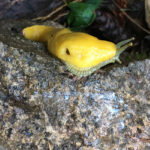
Slugnads, the jabber-slayer.
Commence futterwacken.
Callooh! Callay!